Phones
Who answers when you're on the lift
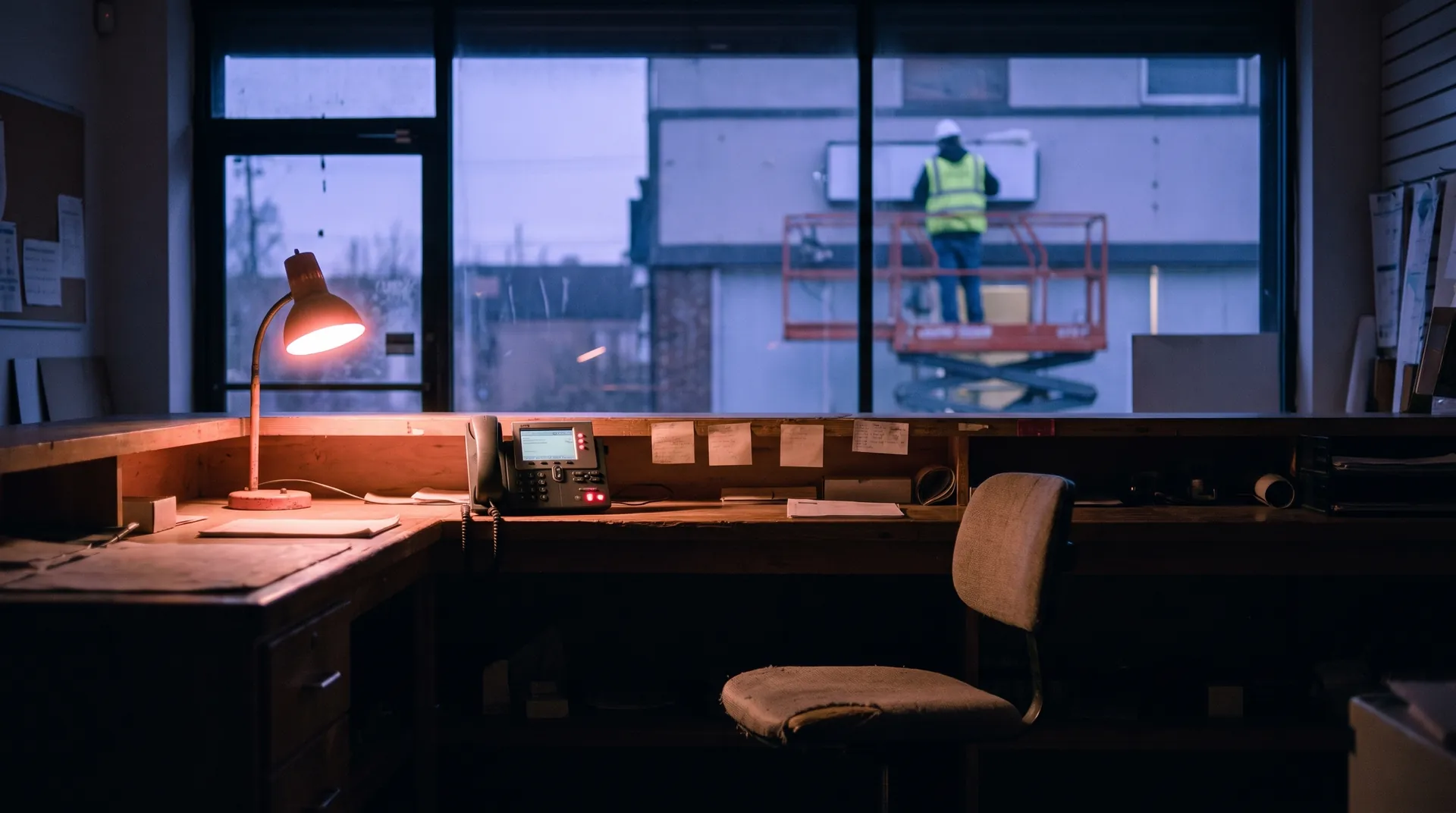
Picture a Tuesday morning. Your installer is on a lift at a storefront, your helper is holding the other end of a channel letter, and the shop phone is ringing on the counter. If you run a small shop, there may be no one at that counter.
Owners on sign forums describe being stretched across too many jobs. Several threads describe one person handling the phones, estimates, art, permits, scheduling and invoicing. One operator wrote that "everything is an emergency." One commenter's advice was "don't try to wear every single hat in the business." That is easy to say. It is hard to do when you only have a few people.
The phone loses that contest. A ringing phone can wait. A half-mounted letter cannot.
The evidence is thin here, and you should know that. Owners describe overload, but we did not find anyone counting their missed calls. Nobody can tell you how many calls your shop misses in a week, and if a number shows up in a sales pitch, it is a guess. You can count your own: look at the missed calls on your phone this week.
What a missed caller does next
Think about what you do when you call a business and nobody picks up. You might leave a voicemail, and you might not. Often you hang up and try the next result on the list.
A person who needs a sign does the same. They found you in a search or on a truck. They have a question, and they are ready to talk now. When no one answers, they are not committed to you. They have your number, and a list of other shops to try.
This matters most for the callers you want. A business owner with a new storefront or a property manager with a tenant moving in is comparing shops, and the first one to respond has an advantage. A customer who just needs a quote for a banner is more patient. A customer who needs the sign before the opening is not.
You will never see the calls that went to someone else. That is the problem with missed calls: the cost is invisible. The calls that cost you jobs look the same as the calls that never would have happened.
A text back right away
The simplest fix is a text, sent to the missed caller before they dial the next shop. It can be short:
"Sorry we missed you, this is [Shop name]. What do you need?"
That is enough. It tells the caller they reached a real shop. It asks one question they can answer from their phone while they are still holding it. And it makes a conversation out of what would have been a hang-up.
Keep it to one question, and make it easy to answer. "What sign are you looking for?" gets a better answer than "How can we help you?" A customer can reply with "a storefront sign, lit, new location" in a few seconds. A customer who has to write a paragraph will not.
You can do this by hand. When you come down off the lift and see a missed call, text the number. The weakness is that you will not always see it right away, and the longer the gap, the less it works.
The text should come from the shop's own number, in the shop's own voice. Mention your name or the shop name, so it does not look like spam. The caller reached out to you first, so a short reply is a natural next step. If they tell you to stop, stop.
Pick it up when you're back on the ground
The best part of a text is that the conversation is waiting when you get back. You are not returning a cold call to a number with no context. You are reading what the customer said, and in many cases they have sent more: a photo of the wall, the name of the building, a date.
Reply from the truck or from the ground, and pick up where the thread left off. The customer is already in the conversation. They feel looked after, and you have the details to quote.
If the details are thin, ask for what you need, one item at a time. If the job is big, move it to a call. If it is small and standard, send a link and let them price it. Either way, you are working on a job instead of chasing a voicemail.
It also protects your focus. You do not have to answer the phone on a lift, because you know the caller will hear from you. That is worth more than it sounds when you are holding a letter at arm's length.
Winton Consulting's missed-call text back sends that first message for you whenever a call goes unanswered, puts the caller's reply into the same conversation, and lets you know by text so you can take it from there.
Put the ideas to work.
Keep reading
More articles.

Phones
Answering the phone with your shop's rules: minimums, rush fees, lead times
Minimums, rush fees and lead times only work if every caller hears them. Put the rules in one place and the phone gives the same answer every time.

Quoting
Getting every detail for a sign quote on the first try
Owners on sign forums say the slow part of quoting is getting details out of the customer. Asking the right questions up front cuts the back-and-forth.

Design time
Limiting free design work before the deposit
Rounds of changes before any money comes in eat designer hours. One way to handle it is a rough look up front and a deposit before real design work starts.